

Downsizing
The sale and the next place sequenced together, at a pace you set rather than one a calendar sets for you.
Free · No sign-up · Watch tonight
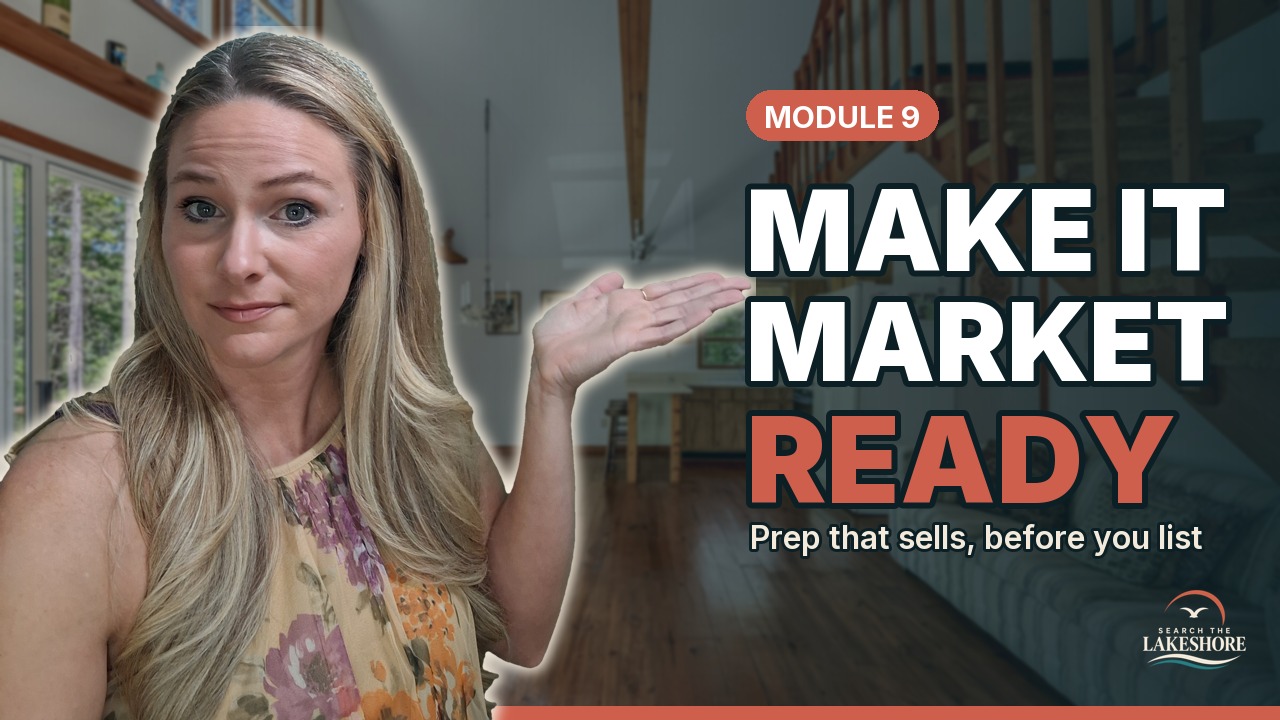
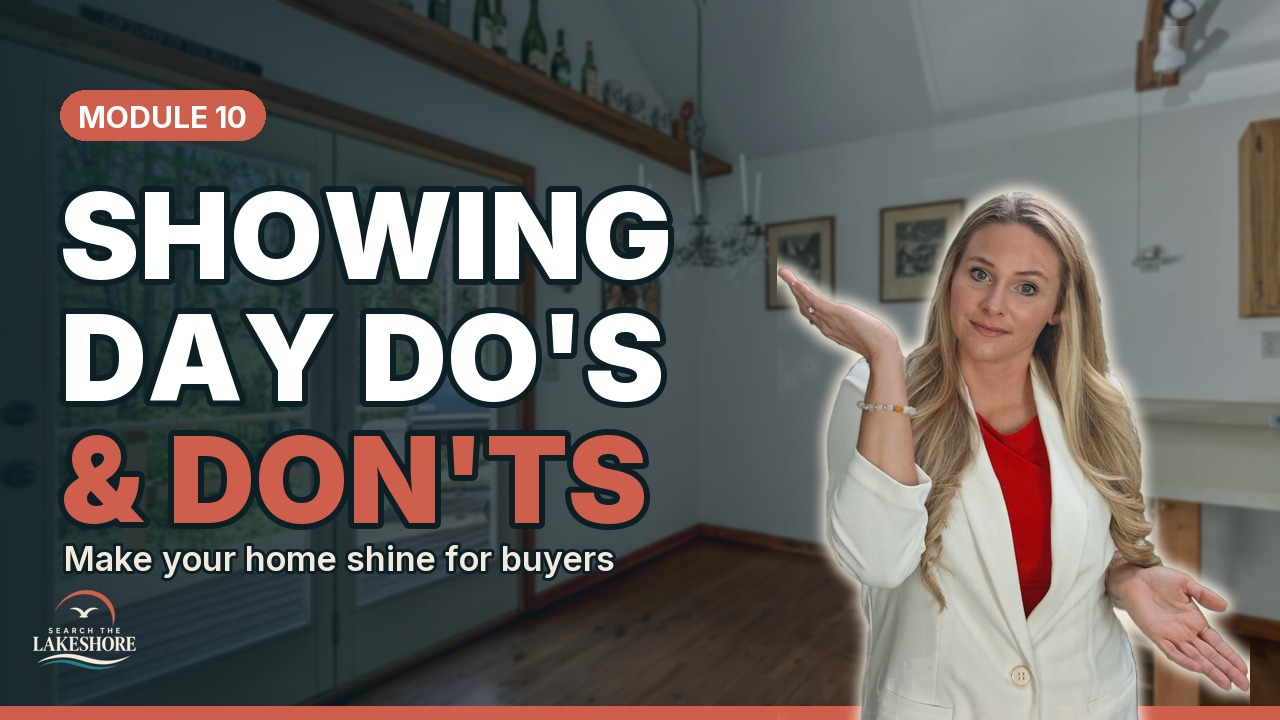
Selling soon? My whole seller's course is free.
12 short video lessons on the plan I walk my own sellers through: choosing your agent, the marketing, commissions, negotiating and getting your home ready. Watch it before you talk to anyone, me included.





On every listing
Buyers walk through your home before they drive up
Every home I list gets a 3D walk-through tour. Buyers can step into every room from anywhere, any time, so the people who book a showing already love the layout. Tap the tour and walk through one of mine.
7867 S 80th Ave, Montague
Your seller dashboard
Every step of your sale, in your pocket
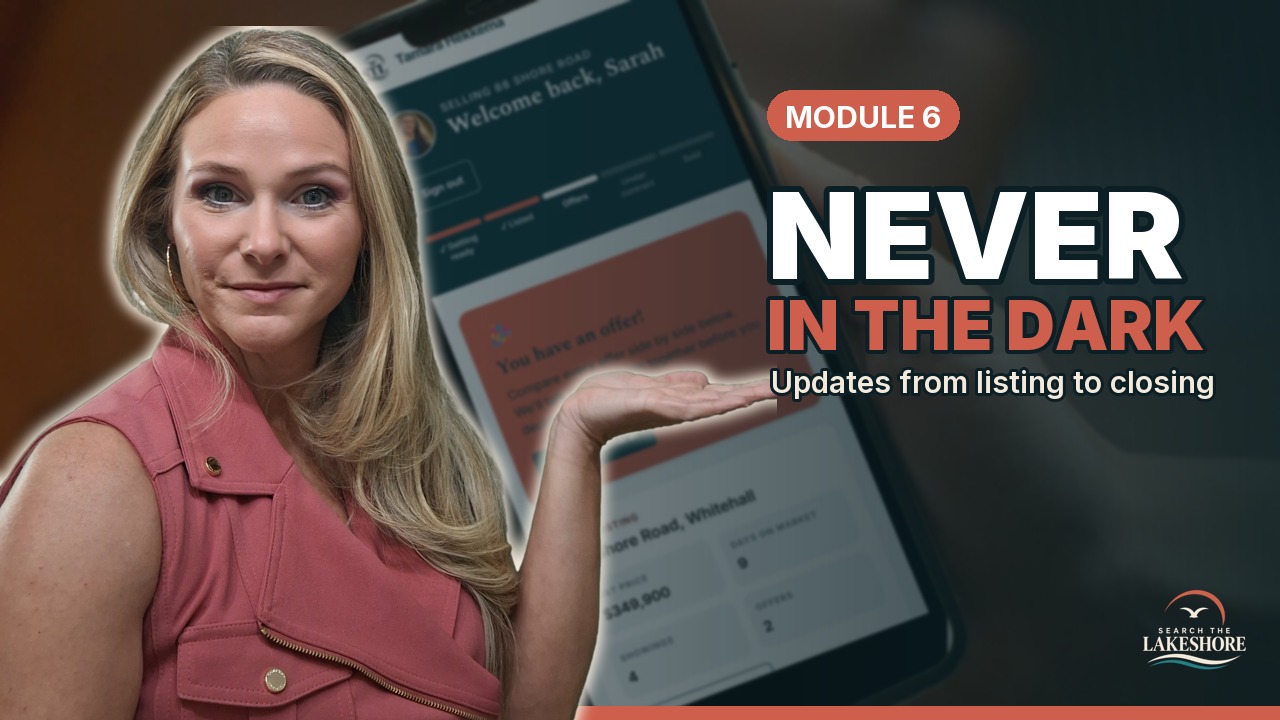
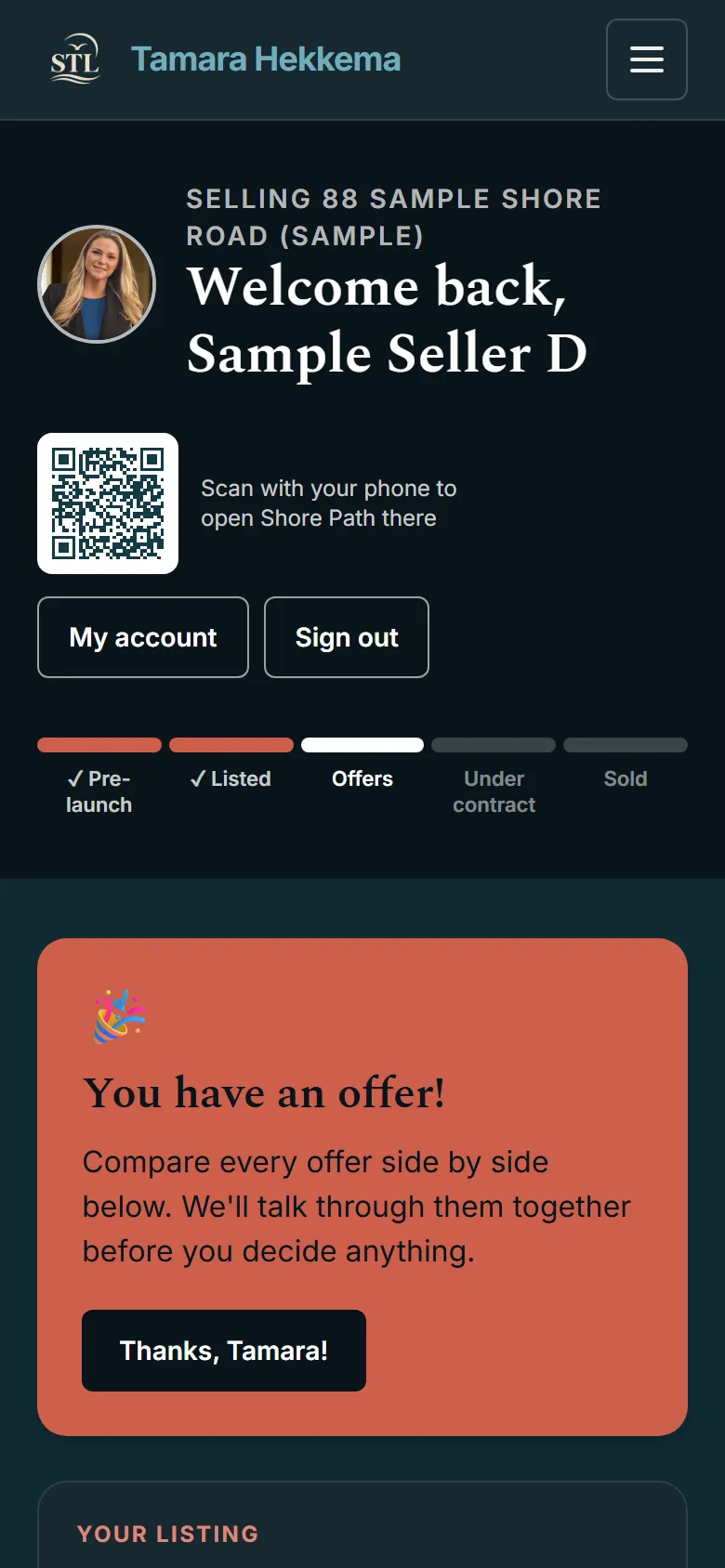
When you list with me, you get Shore Path: your own private dashboard that opens like an app on your phone. No app store, nothing to download.
What's inside
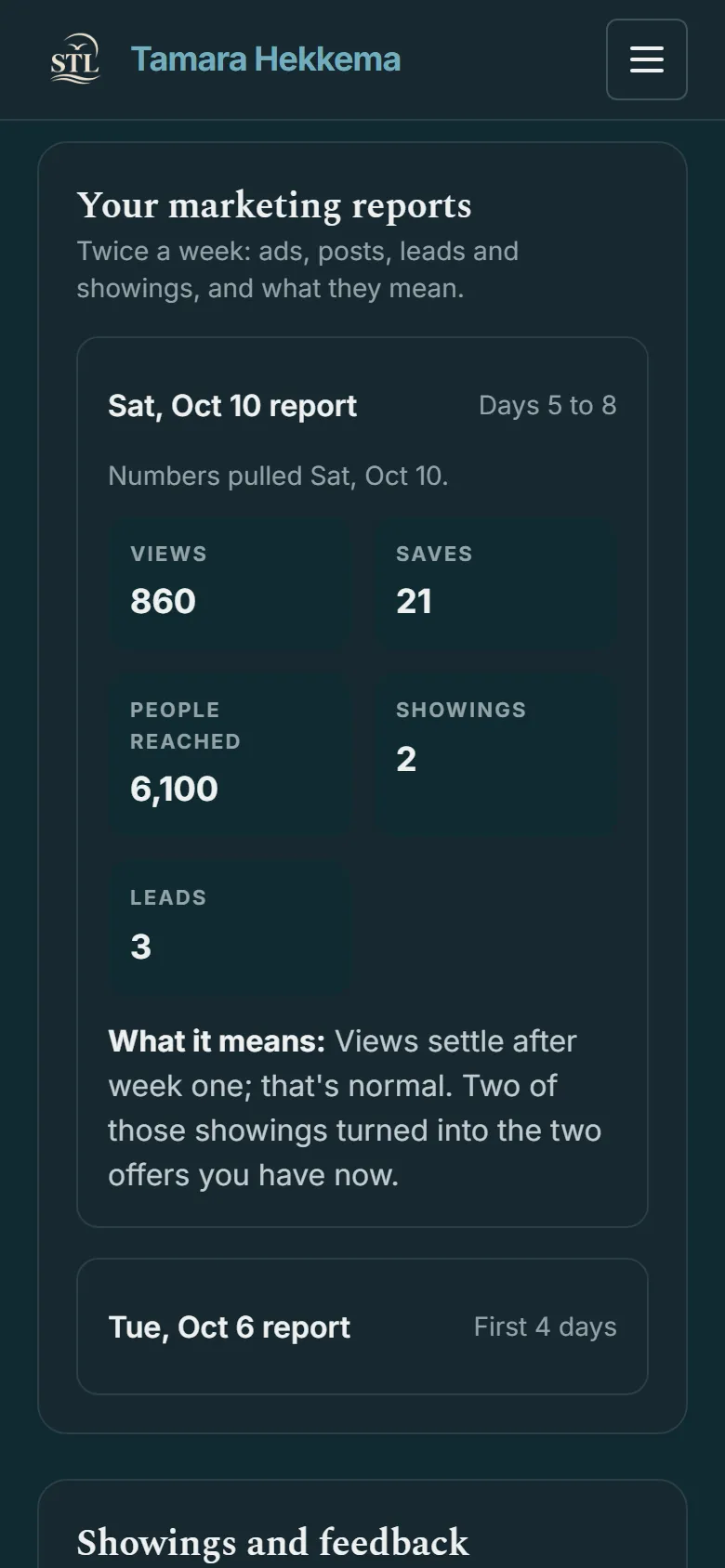
- Marketing reports twice a week: views, saves, people reached, leads, and what the numbers mean
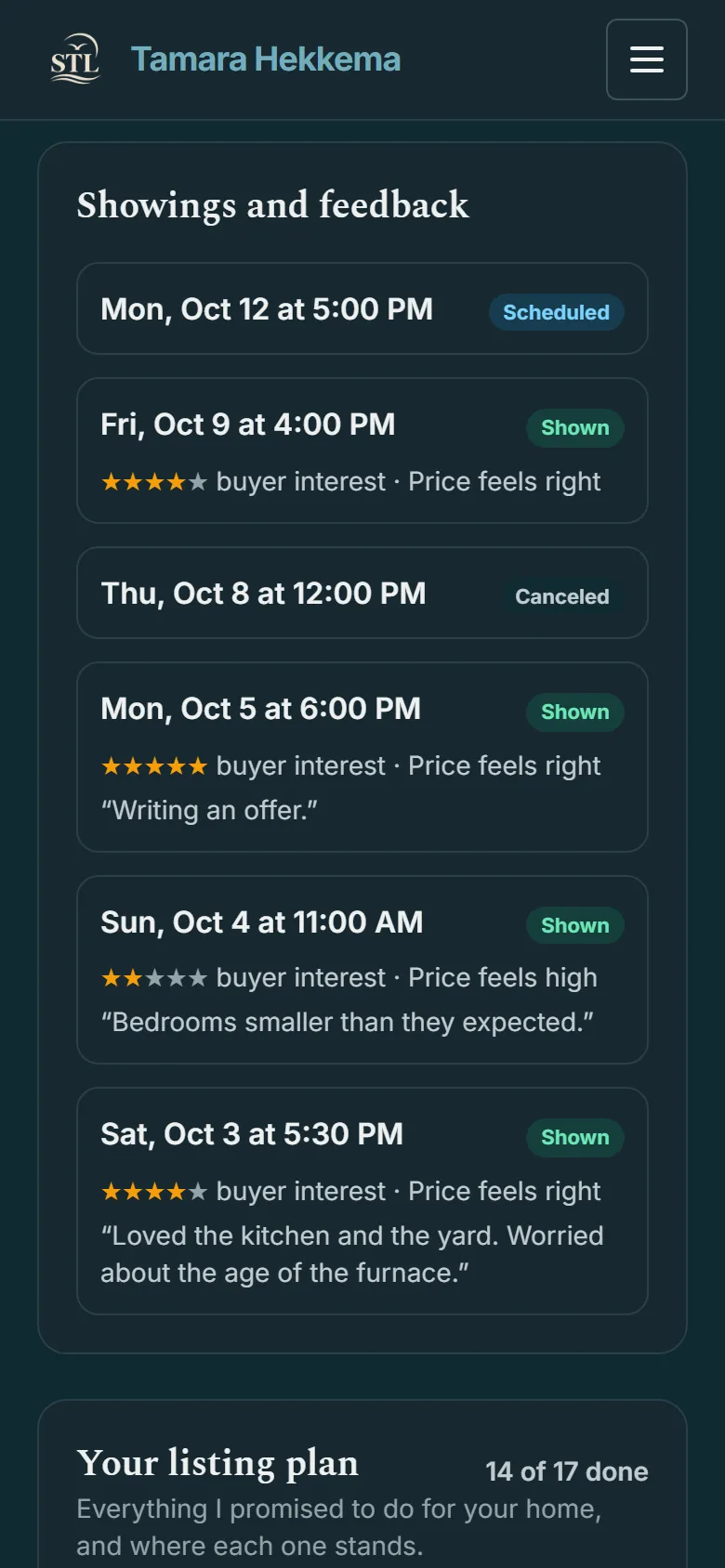
- Every showing, with the buyer feedback as it comes in
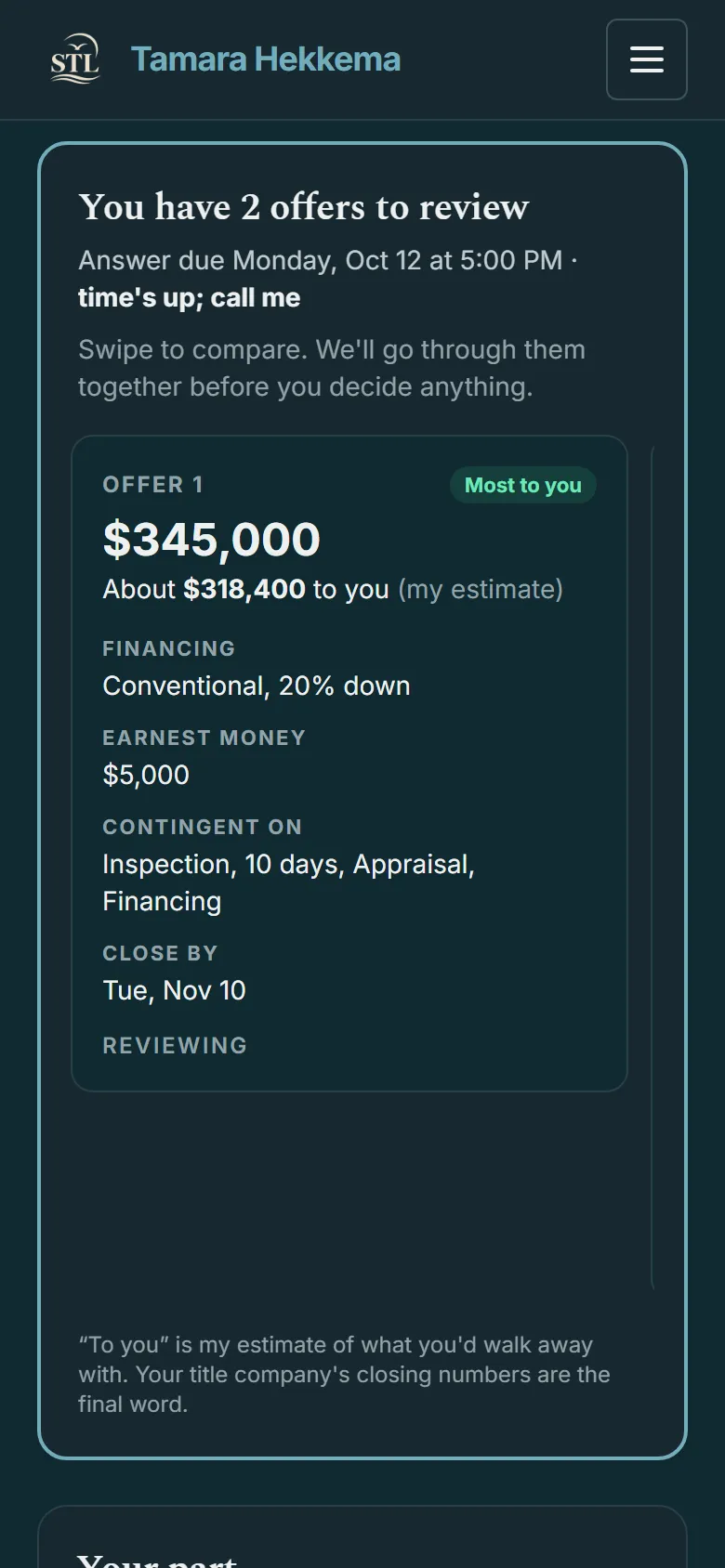
- Offers side by side, with an estimate of what you'd walk away with
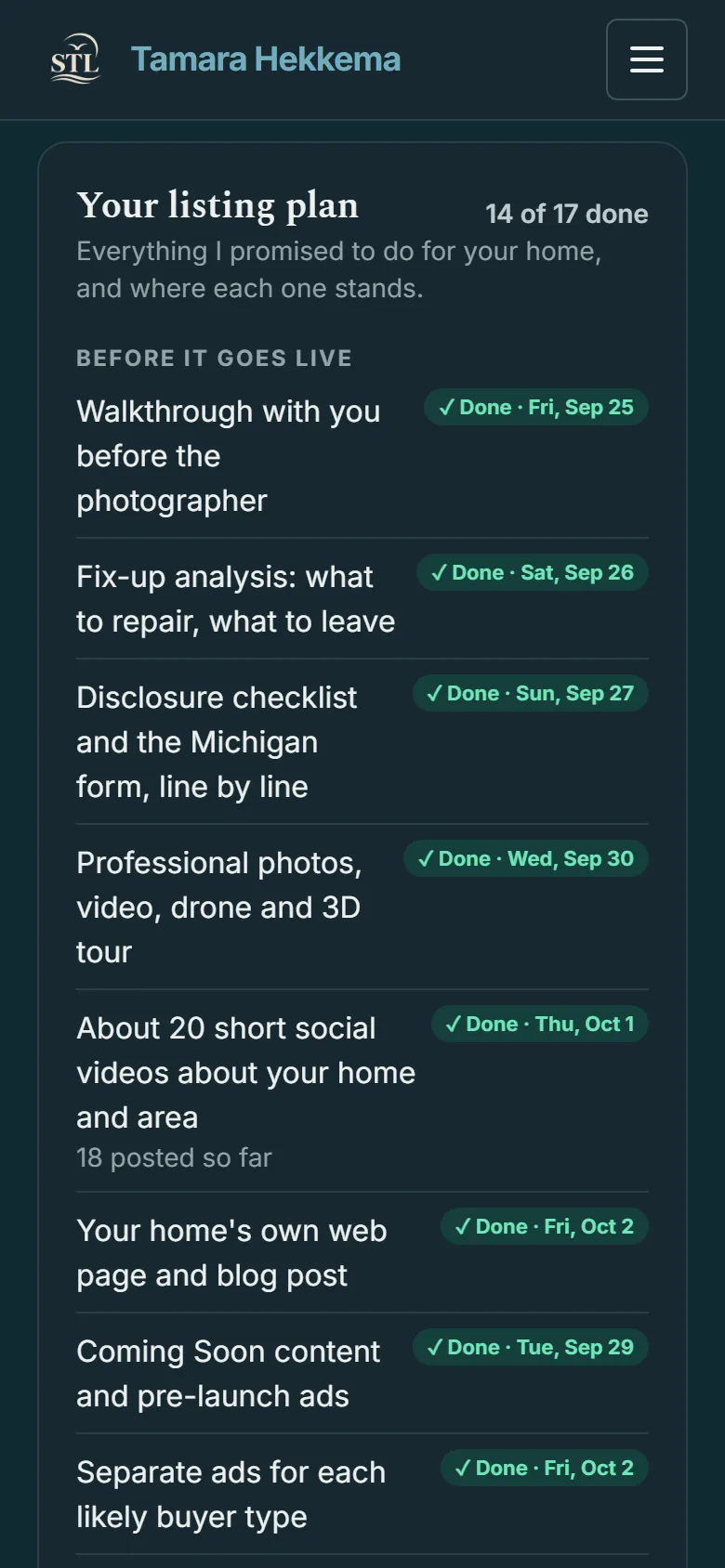
- Your listing plan, with everything I promised checked off as it's done
- Your 30-day prep plan, and a place to send me notes and questions
Why I built it
Selling your home shouldn't mean chasing your agent for updates. I wanted my sellers to open their phone and see exactly where things stand, what happens next, and what I'm doing for them, without it ever being confusing.
Talk with TamaraScreens show a sample dashboard with made-up details.
The Hard Part Is Not the House
The hard part is the order. You are running two transactions that have to meet in the middle, and getting that wrong is expensive in both directions: owning two houses for a while, or owning none.
So that is the first conversation, and it happens before anything is listed. Buy first or sell first, what your actual numbers allow, what happens if one side moves faster than the other, and what the fallback is. Those are answerable questions and they are much cheaper answered in advance.
Then there is the part nobody puts on a website: a house you have been in for thirty years is not simply an asset, and the timeline has to leave room for that.
Where would you like to start?
People Do This for More Reasons Than Most People Assume
There is a lazy version of this conversation that treats downsizing as one move made by one sort of person at one point in life. It is not, and starting from that assumption is how an agent ends up solving the wrong problem.
The reasons I actually hear are practical and they vary enormously:
A smaller monthly payment. Often the whole point, and sometimes the difference between a budget that works and one that does not.
A smaller tax bill, since a lower assessed value generally means lower property taxes year after year.
Less to look after. A big house and a big lot ask for time and money whether or not anybody is using all of it.
Freeing up what is tied in the walls. Where there is real equity in the current place, the next one can sometimes be bought with a much smaller loan, and in some situations outright. That is a different financial life, and it is worth finding out whether it is available to you before assuming it is not.
Wanting a different kind of week. Being able to walk somewhere, travel without arranging for a property, or spend money on something other than a building.
None of those is about anyone's age or circumstances, and I am not going to guess at yours. Tell me what you are actually trying to achieve and the right move follows from it. Whether the numbers work the way you hope is a question for your lender and your tax adviser, and I will say so rather than guess.
What Downsizing Looks Like Here
Plenty of people downsizing in West Michigan are not leaving. They are moving from the big family house to something on the water, or to something smaller with less ground to keep. That is a different move from downsizing to save money, and it should be planned differently.
If the smaller place is a lake place, everything on the waterfront page applies to the buying half, and I will read the property the same way I would for anyone.
And if what you actually want is less house and more land, Fremont and the inland side are usually where the same money goes furthest.
Frequently Asked Questions
Should I buy first or sell first?
It depends on your numbers and how much uncertainty you can carry, and it is the first thing worth working out rather than the last. Selling first is usually safer financially and means you may have to move twice. Buying first is smoother to live through and carries real risk if the sale is slow. There is no universal right answer, only the right one for your situation.
We have thirty years of things in this house.
That is normal and it is worth building into the timeline rather than treating as an afterthought. There is a form that formally delays the listing going live to a date you choose, so you can take the time without a clock running on the listing.
Keep exploring
Ready to make your move with Tamara Hekkema?